KITCHEN WASTE COMPOSTING: GIVE YOUR SCRAPS A SECOND LIFE
Why Compost Kitchen Waste?
Every household produces food scraps – from vegetable peels to coffee grounds. Too often, these end up in the bin. By composting, you can reduce household waste, cut down disposal costs, and turn what was once “waste” into something valuable: soil full of life and nutrients. Composting also supports a circular lifestyle where nothing goes to waste.
Choosing the Right Composter for Food Scraps
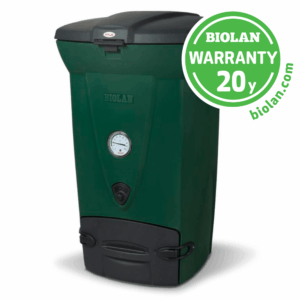
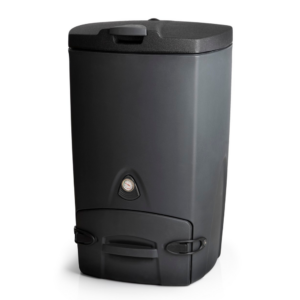
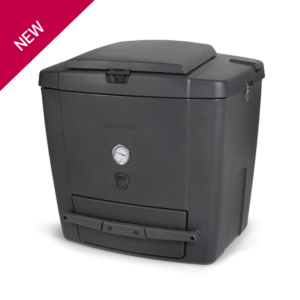
Not all composters are the same. For kitchen waste, a thermal composter is the best choice. Thanks to its insulated structure, the composting process is fast and efficient, turning scraps into fertile compost in just a few weeks. It also keeps the process active year-round – even during cold winters. A good composter is easy to use, hygienic, and designed to speed up decomposition. With the right model, you’ll avoid unpleasant odors and keep your compost neat and efficient.
How to Get Started with Kitchen Waste Composting
- Place your composter wisely. Position it where you can easily access it all year round. A convenient location encourages regular use.
- Start with a base layer. Add about 5–10 cm of Biolan Compost and Toilet Bulking Material to the bottom. This creates airflow and a healthy foundation for composting.
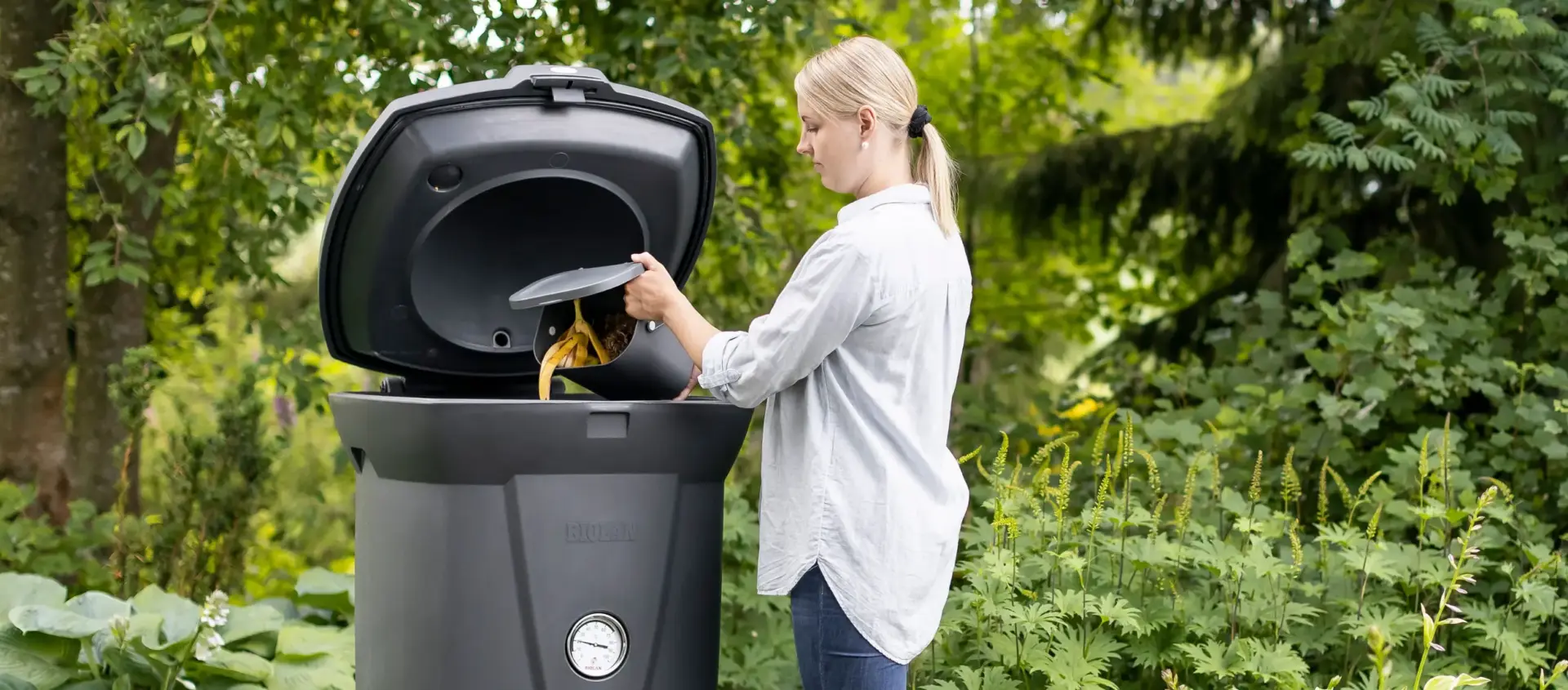
- Know what to add. Almost all kitchen waste can go in Biolan Thermo Composters: food leftovers, vegetable and fruit peels, dairy products, meat and fish waste, coffee grounds, and even small amounts of soft paper. For more details, see our guide: What Can and Can’t Be Composted.
- Add waste regularly. Don’t wait until the bin is full indoors. Take small amounts to the composter several times a week — even daily if possible. Frequent feeding keeps the process active.
- Always cover with bulking material. Each time you add kitchen waste, cover it with a layer of Biolan Compost and Toilet Bulking Material. A good rule: use at least 1/3, ideally 1/2, the amount of bulking material compared to waste. This prevents odors, balances moisture, and speeds up decomposition. Learn more in our article: Why Bulking Material Is Essential for Successful Composting.
- Wait for the heat. The compost begins to warm up once the composter is about half full. In a thermal composter, decomposition is fast — and oxygen demand increases.
- Mix the compost. To keep the mass airy, mix according to your composter’s instructions. For a household, stirring every few weeks is enough. In housing cooperatives or where waste accumulates faster, mixing once a week may be necessary. Biolan’s Quick Composter has a built-in air channel that reduces the need for stirring
- Composting in winter. Use the Biolan Compost Accelerator during cold months. It provides nutrients and energy to keep the process active even in low temperatures. Continue adding small waste portions regularly to maintain steady composting.
- Empty regularly. Empty the composter regularly, but at the latest when space starts to run out. Each time, remove no more than 1/3 of the total volume to keep the composting process stable.
- Enjoy the results. In a thermal composter, kitchen waste turns into ready-to-use cover compost in as little as 6–8 weeks. You’ll have a valuable soil conditioner for your garden, flowerbeds, or pots.
The Rewards: Rich Soil for Your Garden
With patience and the right method, your kitchen scraps turn into dark, crumbly compost – a natural soil improver full of nutrients. Use it in your garden, flowerbeds, or even potted plants. It enriches the soil, improves structure, and reduces the need for synthetic fertilizers. Composting makes your household more sustainable while giving your garden a boost.